


The History of Giving Flowers: How Old Is the Tradition?
A passing remark from a visitor led us to ask how long people have been giving flowers. From prehistoric graves and ancient Egyptian bouquets to the modern florist, the answer reaches back thousands of years.
I was talking with an American visitor recently when he said something along the lines of: “Sending flowers is quite a new thing, isn’t it? I don’t think people have been doing it for very long.”
I'm paraphrasing, but his question stayed with me. If by sending flowers he meant placing an online order and having a carefully wrapped bouquet delivered to someone’s door, then yes, that's very recent. But what about the gesture itself? How long have people been cutting flowers, arranging them and giving them meaning?
The answer surprised me. The history doesn't just go back hundreds of years. It goes back thousands, and perhaps much further.
Flowers before written history
Flowers rarely survive in the archaeological record. Petals decay, stems disappear and even the most carefully made arrangement soon returns to the earth. That makes the earliest evidence unusually precious.
At Raqefet Cave in present-day Israel, archaeologists found impressions of flowering plants beneath several graves made by Natufian people between about 13,700 and 11,700 years ago. The plants appear to have formed a lining inside the burial pits before the bodies were placed there.
We can't know exactly what that meant. The flowers may have brought colour or fragrance to the burial. They may have carried a meaning understood by the community, or simply made the resting place more beautiful. It would be too much to call them bouquets in the modern sense. Even so, the discovery suggests that people were deliberately placing flowers around the dead long before written language could tell us why.
That's what makes the history so difficult to trace: the flowers disappear, while the feelings behind them leave almost no record at all.
The bouquets of ancient Egypt
Ancient Egypt gives us something more tangible. It also feels surprisingly familiar.
The Metropolitan Museum of Art holds the remains of a flower bouquet from Egypt’s Middle Kingdom, dated to roughly 2030–1640 BCE. At least 3,600 years later, its plant material and reed binding still survive. This isn't just an image of flowers or a written reference to them. It's an actual arrangement gathered and bound by human hands.
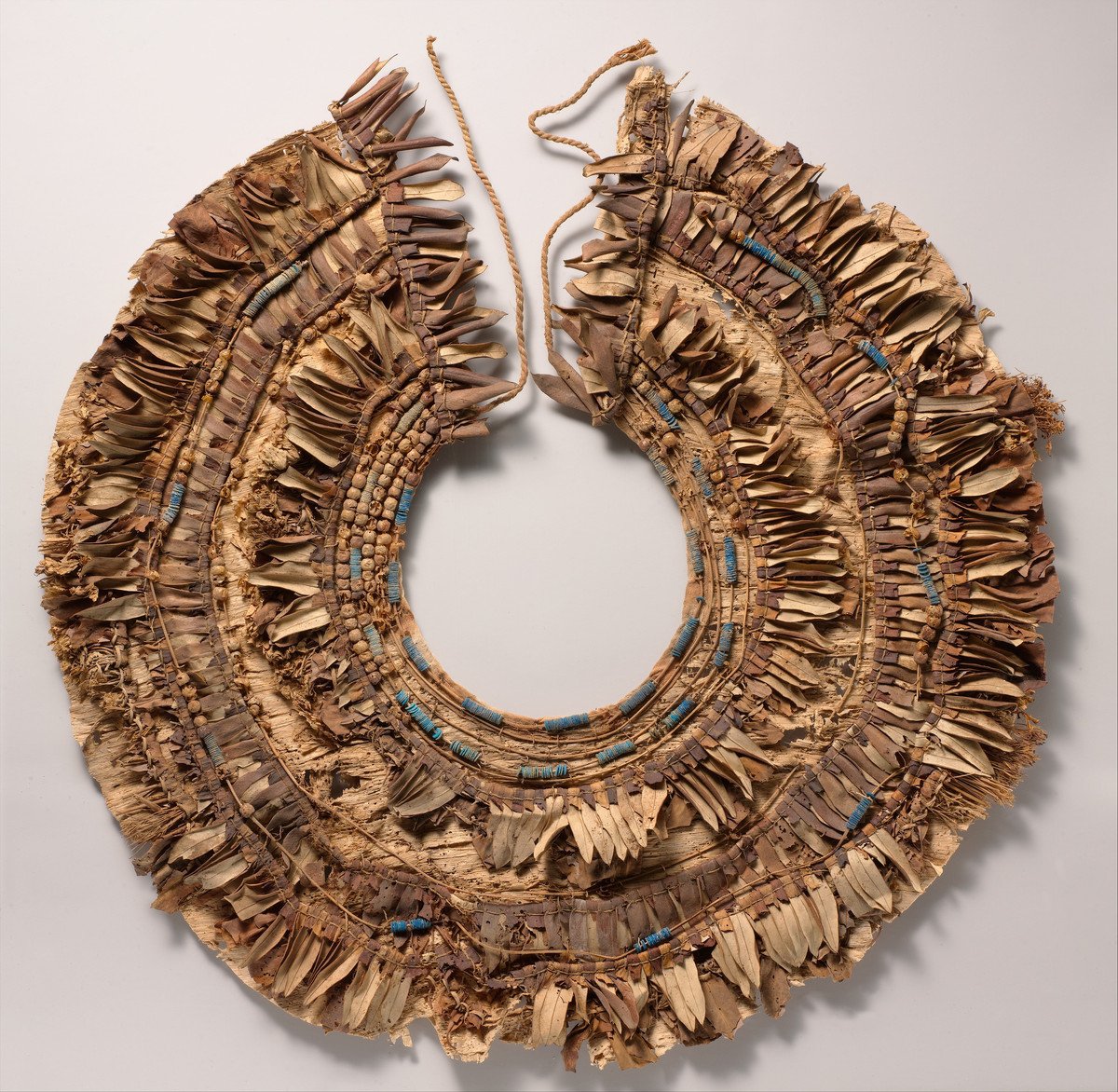
Flowers played an important part in ancient Egyptian ceremonies. Tomb paintings show tall bouquets being presented as offerings during festivals. Garlands and floral collars were made from real petals, leaves and berries. A beautifully preserved collar associated with the burial of Tutankhamun still contains traces of cornflowers, poppies, olive leaves and other plants from more than 3,300 years ago.
One of the most affecting images appears on a decorated casket from Tutankhamun’s tomb. It shows the young king leaning on a staff and reaching out as his queen offers him two bouquets of lotus, papyrus and poppies. The scene is ancient, but the gesture feels familiar. One person has gathered something beautiful and is placing it into the hands of another.
These ancient arrangements weren't the florist bouquets we know today. They belonged to a world of gods, kings, festivals and the afterlife. Yet the essential actions are already there: choosing flowers, gathering them together and presenting them with intention.
Flowers were not always given as bouquets
There's no single birthplace for the tradition because people in different cultures found their own ways to offer, wear and arrange flowers.
Across the Indian subcontinent, flowers have long been threaded into garlands for worship, weddings, welcomes and rites of passage. A garland can adorn a deity, honour a guest or be exchanged by a couple as a sign of union and mutual trust. Here, flowers aren't simply displayed in a vase. They're carried, worn and physically passed from one person to another.
In China, the art of arranging cut flowers in vessels developed partly from floral offerings to Buddhist deities. By the Tang and Five Dynasties periods, enjoying flowers and surrounding oneself with arrangements had spread beyond the court. During the Song dynasty, placing seasonal flowers in a hall or study was counted among the refined pursuits of cultivated life, alongside burning incense, drinking tea and hanging paintings.
In Japan, the custom of placing flowers before a Buddhist altar became common after Buddhism arrived in the sixth century. Alongside older Japanese ideas about the spiritual presence of nature, these offerings contributed to the development of ikebana. In this tradition, an arrangement doesn't have to be abundant. The line of a stem, the angle of a branch and the empty space around them can be as important as the flowers themselves.
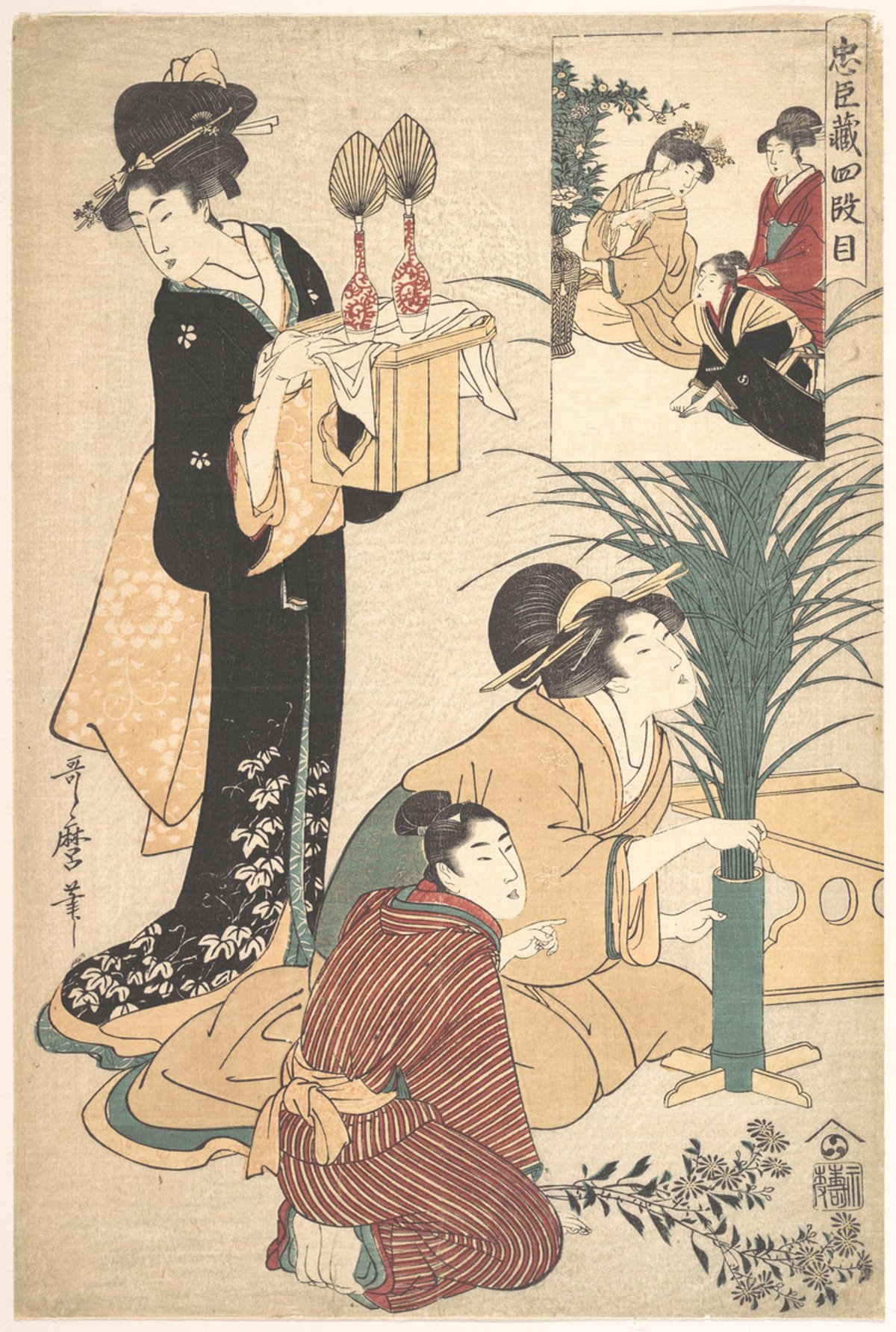
The forms and their meanings differ, but they all turn natural beauty into a deliberate human gesture.
When did the modern flower bouquet appear?
For much of history, fresh flowers were seasonal, local and difficult to preserve. A full, mixed bouquet was often an expensive luxury, or something that existed only in a painting.
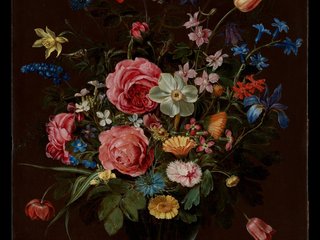
In the early seventeenth century, Dutch and Flemish painters produced extraordinarily detailed pictures of flowers gathered in vases. To modern eyes, they can resemble the work of an extravagant florist. At the time, however, such abundance was remarkable. The Rijksmuseum notes that flowers were expensive and that gardens contained far fewer blooms than we might expect today.
Some painted bouquets brought together flowers that bloom at different times of year, and sometimes plants originating in different parts of the world. The arrangement couldn't have existed exactly as painted. The artist studied flowers as they appeared through the seasons and assembled an ideal bouquet on the canvas, bringing an entire year of flowering into a single arrangement.
These paintings tell us that cut flowers were already objects of desire. They could represent rarity, knowledge and status, but also the wonder of gathering nature’s variety and bringing it into the home.
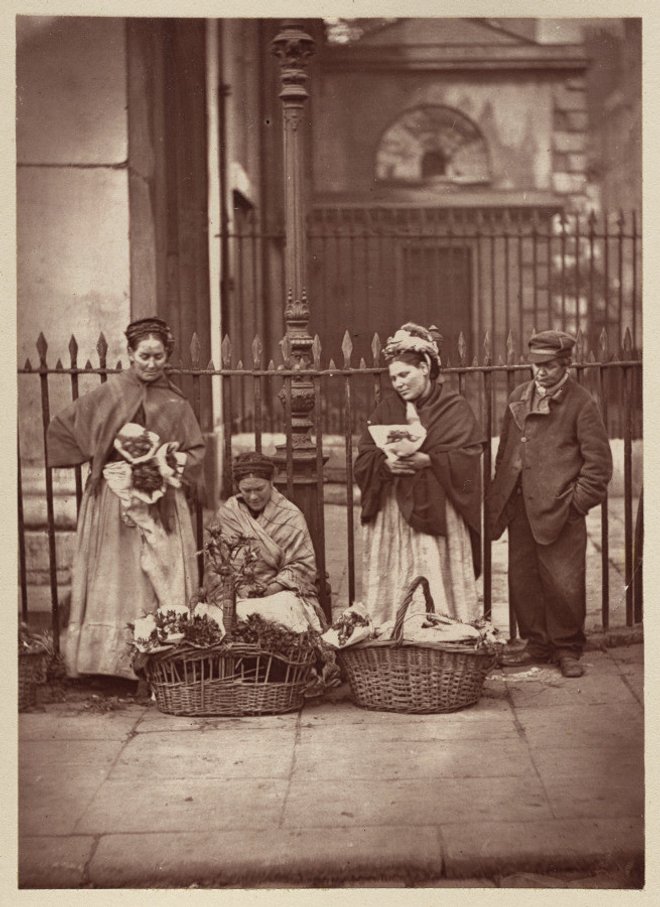
By the nineteenth century, flower buying looked much more like it does today. Markets supplied cut flowers to homes, while street sellers offered small, affordable bunches to passers-by. John Thomson’s 1877 photograph of the flower women at Covent Garden records a world in which flowers could be bought on an ordinary London street rather than admired only in a wealthy garden or painted collection.
The same century popularised the “language of flowers”, or floriography. Illustrated guidebooks assigned meanings to different blooms, helping people construct floral messages of affection, friendship, hope or mourning. Those meanings weren't always consistent from one book to the next, and they shouldn't be mistaken for a universal secret code. But the books became popular because they met a familiar desire: to let flowers say something that might be difficult to put into words.
Sending flowers has changed. The gesture hasn't.
As cultivation and transport improved, florists could do more. Flowers could travel further, more varieties could be brought together, and a professionally arranged bouquet could be ordered for someone far away. The telephone and, later, the internet made the act of “sending flowers” feel almost instant.
That modern system is probably what the visitor had in mind. Ordering a bouquet on a screen and arranging its delivery to a hotel, home or workplace clearly isn't an ancient practice. But it's a new piece of machinery built around a very old idea.
Here in Thailand, the wrapped florist bouquet used for birthdays, graduations or Valentine’s Day may be a relatively modern convention, but flowers already had deep ceremonial and personal meaning. Garlands, temple offerings and flowers given to elders are part of a much older cultural language of respect, devotion and good wishes. We have explored some of those associations in our guide to the meaning of flowers in Thai culture.
Why has giving flowers endured?
Maybe flowers remain meaningful because they allow us to share something extraordinary from the natural world.
A beautiful sunset can stop us in our tracks, but we can't pick it up, carry it across town or place it in someone else’s hands. Flowers offer another kind of natural wonder: beauty that can be gathered, arranged and given.
A flower rewards attention. The closer we look, the more there is to see: the architecture of its petals, the gradations of colour, the scent and the small irregularities that distinguish one bloom from another. A bouquet brings those details together and gives the person receiving it time to notice them, return to them and enjoy how they change a room.
It also carries a beautifully simple message: I saw something wonderful, and I wanted to share it with you. That may be why flowers have endured as gifts across so many cultures. They turn admiration into generosity and make a birthday, an arrival, a farewell or an ordinary Tuesday feel worth noticing.
Flowers also allow feelings to take physical form. Affection becomes something a person can hold. Sympathy arrives at the door. Gratitude sits on a table. Even when the sender is far away, the gift occupies the same room as the person receiving it.
This helps explain why the tradition has survived while its forms have changed so dramatically. A flower may be laid in a grave, woven into a garland, placed before an altar, painted into an impossible bouquet or wrapped in paper and delivered across a city. Each belongs to a different time and culture, yet each turns beauty into meaning.
So, was the visitor right?
The florist, the delivery vehicle and the online checkout belong to the modern world, but the instinct behind them is much older. When we choose flowers for someone, we're continuing one of humanity’s oldest and most recognisable gestures: gathering something beautiful and using it to express what we feel.
The delivery is modern. Giving flowers is ancient.
Ready to Order Fresh Flowers?
Browse our beautiful collection of bouquets for delivery in Phuket.
Shop Bouquets